Every time a trailer backs up to an open dock door, there’s a gap between the trailer and the building. Rain, wind, dust, insects and your heating or cooling bill all go through it. Dock seals and dock shelters both close that gap, but they work differently, and choosing the wrong one costs you either energy or efficiency.
Key takeaways
- A dock seal is a set of foam pads the trailer presses into. It gives the tightest seal and suits docks that serve trailers of similar size.
- A dock shelter is a frame with fabric curtains that wrap the trailer’s top and sides. It handles a wider range of trailers and leaves the full trailer width open to forklifts.
- Mixed fleets, wide loads and frequent full-width access point to a shelter. Uniform fleets and temperature-sensitive goods point to a seal.
How a dock seal works
A dock seal is mounted to the wall around the dock door: two foam side pads and a head pad (or head curtain) across the top. As the trailer backs in, it compresses the pads, forming a gasket on the sides and top of the trailer. Pentalift describes it as a seal that “forms a gasket seal on the sides and the top of the back of the truck” (Pentalift).
Our dock seals are built for exactly this:
- Fixed Head Pad Dock Seal — designed for 8′ x 8′ door openings and trailers 12′ to 13′ high on a typical 4′ dock. We recommend it “when full access to the back of the trailer is not required.” 99% memory foam, 22 oz. Hi-Tear vinyl, and a waterproof wraparound design with a vapor barrier.
- Adjustable Head Pad Dock Seal — for 8′ x 10′ openings. A spring-loaded head pad with 36″ of travel (48″ optional) seals trailers from 11′ to 13.5′ high.
- Head Curtain Dock Seal — for taller openings from 8′ x 10′ to 9′ x 10′. A weighted head curtain on a rope-and-pulley system adjusts to varying trailer heights, while foam side pads cushion the trailer.
The trade-off: because the pads press against the trailer’s sides, a seal covers part of the trailer opening. Rite-Hite notes that seals “can restrict forklift access” but “provide a tight seal for a relatively low price” (Rite-Hite).
How a dock shelter works
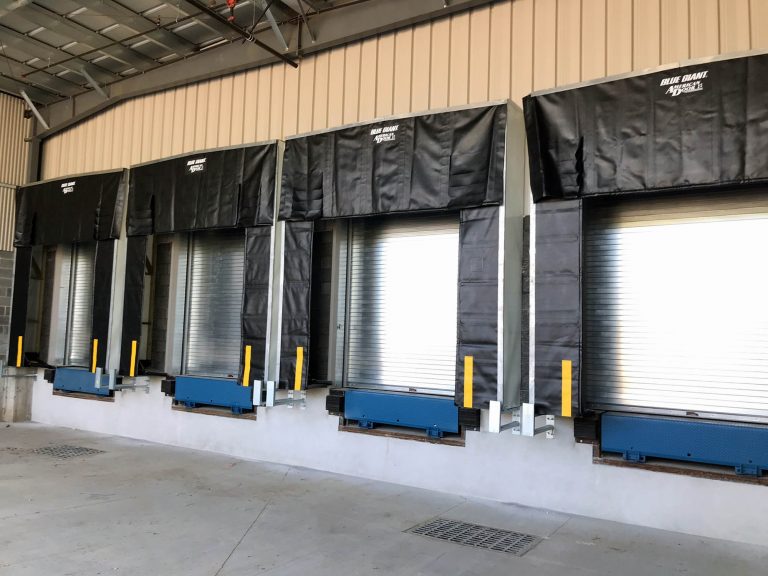
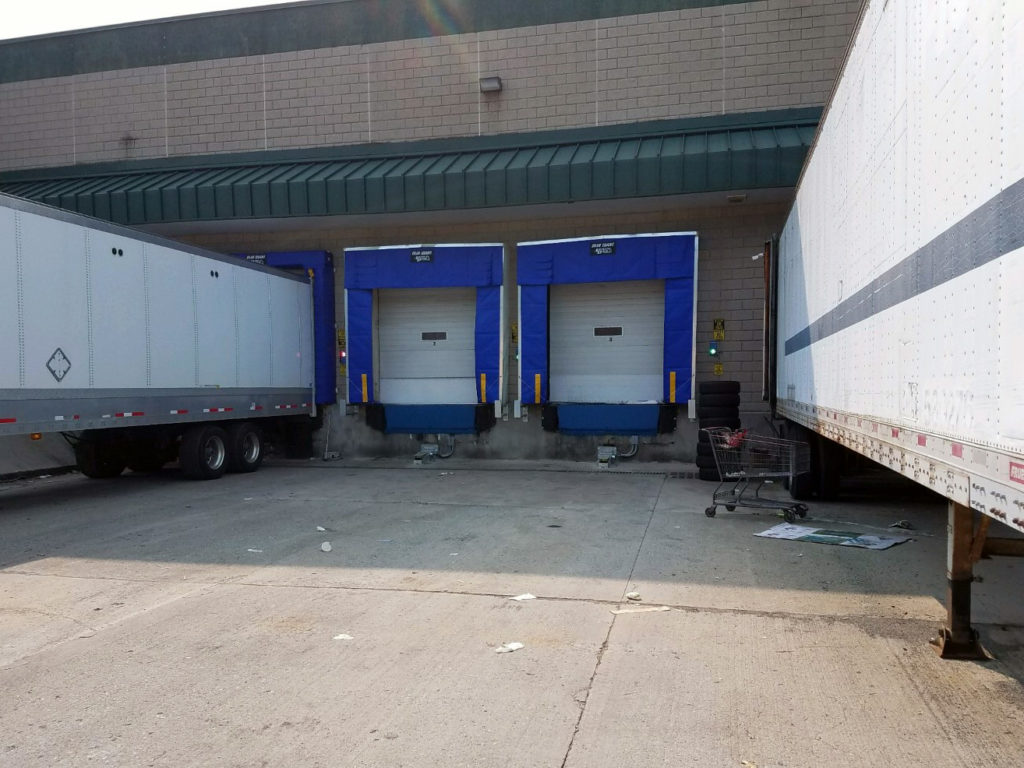
A dock shelter is a three-sided frame that projects from the wall, with fabric curtains on the head and sides. The trailer backs into the shelter, and the curtains drape against its top and sides instead of being squeezed. Because nothing presses into the trailer opening, shelters “allow for full, unobstructed access” and “service a wide variety of trailer heights and styles” (Rite-Hite).
Our shelters cover a range of conditions:
- Stationary Dock Shelter — for openings up to 10′ x 10′. Pressure-treated lumber frame, curtain stiffeners that keep contact with the trailer, and translucent polyethylene sheeting that lets daylight into the dock.
- Retractable Dock Shelter — a galvanized steel frame that folds back when struck by a trailer, which reduces curtain pressure and extends the shelter’s life.
- Foam Frame Dock Shelter — no mechanical or adjustable parts, with unrestricted access to the trailer and suited to tailgate or standard trailers.
- HingeMaster™ Dock Shelter — a full-access shelter for openings around 10′ x 10.5′ that also seals the gaps beside open barn-style trailer doors, using interchangeable J-hooks.
The trade-off: a shelter doesn’t compress against the trailer, so it seals less tightly than foam, and it projects farther from the wall — Pentalift describes a shelter frame projecting about 24″ (Pentalift).
Seal or shelter? A quick decision guide
| Your situation | Better fit | Why |
|---|---|---|
| Trailers are mostly the same height and width | Dock seal | Foam compression gives the tightest seal when trailers are consistent |
| Mixed fleet — different heights, widths, tailgates | Dock shelter | Curtains adapt to a wide range of trailers |
| Forklifts need the full trailer width (wide pallets, side-by-side loads) | Dock shelter | Nothing presses into the trailer opening |
| Temperature-controlled goods or high energy costs | Dock seal (or a well-fitted shelter) | Compressed foam leaks the least conditioned air |
| Tall dock doors or high trailers | Head curtain seal or shelter | An adjustable head curtain or shelter reaches the trailer top |
| Shelters keep getting hit by trailers | Retractable shelter | The frame folds back when struck instead of breaking |
| Trailers with barn-style doors | HingeMaster™ shelter | Seals the gaps beside the open doors |
Don’t forget the rain
Water runs off the trailer roof and into the dock right where people are working. A Dock Rain Shroud can be added to an existing seal or shelter. A foam wiper seals against the top of the trailer to keep rainwater out of the dock.
Get the most out of either one
- Match the unit to the door and the trailers. The opening size, dock height and the range of trailer heights you see decide which model fits.
- Use the guide stripes. Many of our seals and shelters have high-visibility yellow guide stripes that help drivers center the trailer, which reduces wear and improves the seal.
- Replace worn pads and curtains. Torn fabric and crushed foam leak air. Several of our models have replaceable pads and wear flaps.
- Treat the dock as a system. A seal or shelter works best alongside an insulated dock door, a properly sealed leveler and a vehicle restraint. See our loading dock safety checklist for the rest of the dock.
Common questions
Is a dock seal or dock shelter better for a refrigerated warehouse?
A dock seal usually leaks less conditioned air, because the trailer compresses the foam into a tight gasket. A shelter can still work if your trailers vary a lot. For more on cold docks, see our guide to doors and dock equipment for cold storage.
Can I use a dock seal with different trailer heights?
Within a range. Our adjustable head pad seal covers trailers from 11′ to 13.5′ high on a 4′ dock, and the head curtain seal adjusts to varying trailer heights.
Do shelters restrict forklift access?
No. That is their main advantage. The curtains drape around the trailer rather than pressing into its opening.
Need help choosing?
Tell us your dock door size, dock height and the trailers you usually receive, and we’ll recommend the right seal or shelter. Contact American Door — we serve the five boroughs, Long Island, Westchester and Rockland.
Sources
- Rite-Hite, “Dock Shelters vs Dock Seals: The Differences and Benefits of Both”
- Pentalift, “What are the differences between a dock seal and a dock shelter”
- Product specifications: americandoor.com product pages linked above.